

Adam Clegg
Swift Accountancy
Relational Practice and Contemporary Accountancy
In this conversation, we explored what it means to run an accountancy firm built around relationships rather than volume. The business, now five years in, has been shaped by a commitment to personalised support and a refusal to default to the impersonal systems that can dominate the sector. By integrating modern technology into day-to-day workflows, the practice has created more space for meaningful conversations with clients, allowing for a clearer understanding of their financial circumstances. What emerged was a contrast with more traditional firms, where outdated processes often limit both efficiency and human connection. Here, the emphasis is on clarity, responsiveness, and knowing the people behind the numbers.
Reflections on Ashford’s Economic Climate
We also discussed the wider pressures on Ashford’s economy. Retail closures, declining footfall, and the lingering effects of poorly executed infrastructure projects have created a climate of uncertainty for many businesses. The sense that local planning has lacked coherence came through strongly. Yet, alongside the challenges, there remain pockets of energy: cultural gatherings, business events, and small community-driven projects that continue to bring people together. The accountant noted that while these initiatives offer moments of optimism, confidence among local businesses remains fragile, shaped by economic instability and inconsistent town-centre strategy.
Networks, Opportunity, and the Role of Community
Despite the difficulties, the conversation carried a sense of cautious possibility. Ashford’s proximity to London still brings enquiries and interest, especially through local networking channels such as the chamber of commerce. The accountant highlighted how conversations within these groups often open doors, generating both leads and a sense of shared purpose. Community-oriented initiatives, particularly those aimed at supporting young entrepreneurs, were described as essential to strengthening the local economic landscape. When people are given access to mentorship, guidance, and a supportive network, new ideas begin to take shape and small businesses feel more able to grow.
Looking Ahead
The discussion ended with a view towards what Ashford might need in order to rebuild confidence. Targeted investment in community infrastructure – from structured support for early-stage founders to partnerships with organisations already doing effective work in this area – could help create a more supportive environment for local enterprise. While the challenges are real, the potential for renewal is equally present. The theme that ran throughout was the value of relational work: businesses grounded in genuine connection, and a local economy strengthened through shared effort rather than isolated activity.
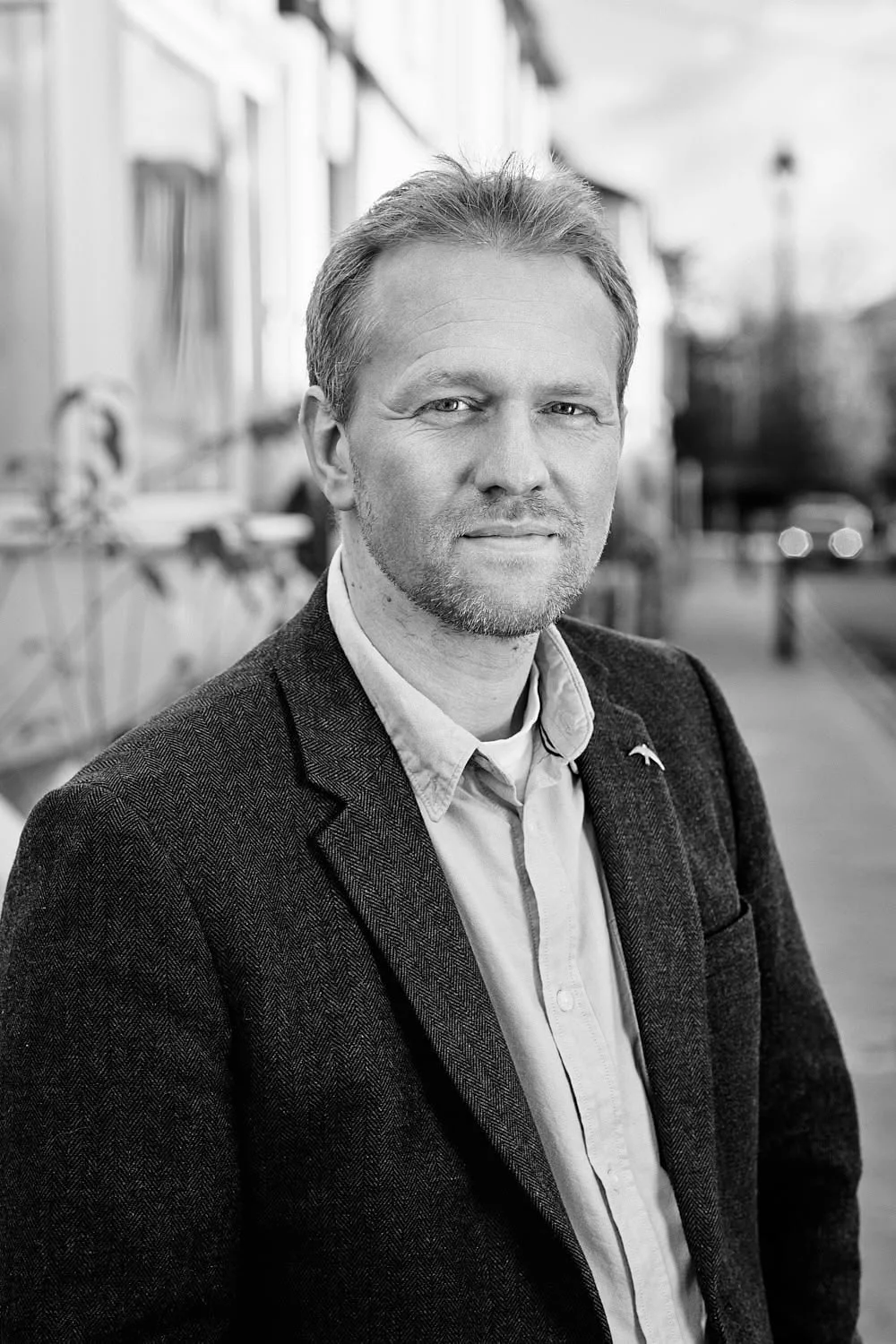
Hi Adam! Let’s start by telling everyone what it is that you do.
So I run an accountancy business. We've been going for five years and I started just after a break in the lockdowns. Essentially, providing accountancy support and services to businesses, primarily in Ashford, but all across Kent and the UK as well. Our core is local things, working on a more personable level, rather than, say, sausage factory accountants, where it's just about getting the numbers in and dealing with as many clients as possible. It's far more important to me/us, to work on a more relational basis with clients.
And what does that mean? What sort of thing would you practically do that's different from a, maybe a less personable one?
So I would, one of the things is the way that we've got kind of tech integrated in what we do. So a lot of firms, from what I see, where they've got kind of legacy systems, they are tied up in older practices or methods or softwares.
And so in starting that much sooner, when the industry has changed massively over the last 10 years or so, we're able to kind of ride the curve of all the innovations. And small things in that mean that we're able to work on a more personal level in the way that we interact with people, and care a little bit more, I would say, than what I've seen in other firms – where there's not the level of relationship, from what I've seen.
What made you get into accountancy?
It was my dad. So my dad had his own accountancy business, I started working for him and then eventually moved on from there to go and get chartered – qualified – and it went from there, really. It wasn't really a grand plan!
A lot of people think accountancy is all about being really good at maths, but more than that, it's about being able to understand a concept; so, ‘what has actually happened in your business?’ and making that relatable and being able to tell the story of [it]. ‘This is what your accounts say [and] this is what it actually means in a more practical sense.
A good accountant is good at analysing a situation in the context of the client and being able to relate that to them, and then extrapolating. Let's say you're a construction company, your margin's gone down, why is that? It's because of this, that and the other, and this is what you need to do differently to combat it. And then because you've been having more dialogue and conversation with them, they can say, oh yeah, that's because dodgy Dave the builder, he was nicking materials from the site, so there you go.
And how have you found working in Ashford? Have you always worked in Ashford?
No, so I originally started working in the Midlands, in Leicester, working in Canach and then in Hinkley, so I've worked for quite a few firms, then moved down to Kent in 2016 and worked for three firms down here, Folkestone and then two in Ashford, before starting on my own. So I learnt a lot from all these different firms as to what they did well, what they didn't do so well, to then kind of curate and get the idea of how I do things.
Ashford's a really interesting one in terms of what I see, in terms of it's got unique characteristics in the outlets. [The outlet] does draw away from the high street a little bit, and then you've got all these other kind of things going on around the outside that don't necessarily enhance what's going on.
A lot of A-order projects, I would say, that are in Ashford [are empty]. So, County Square is really empty. Debenhams, no one seems to be looking to replace that. There's a whole unit on the other side of County Square that's probably about the same size, never ever been let. That's a huge problem. And as we walk through, a lot of them, they're closing down stores. And then that repeats itself on the high street.
You've got Elwick Place, which is basically empty because no one's been able to make it work because the rents are too high. Park Mall being closed, which was touted as a really good success by Ashford Council about three years ago. The fact that they've managed to make it work and then they're demolishing it two or three years later.
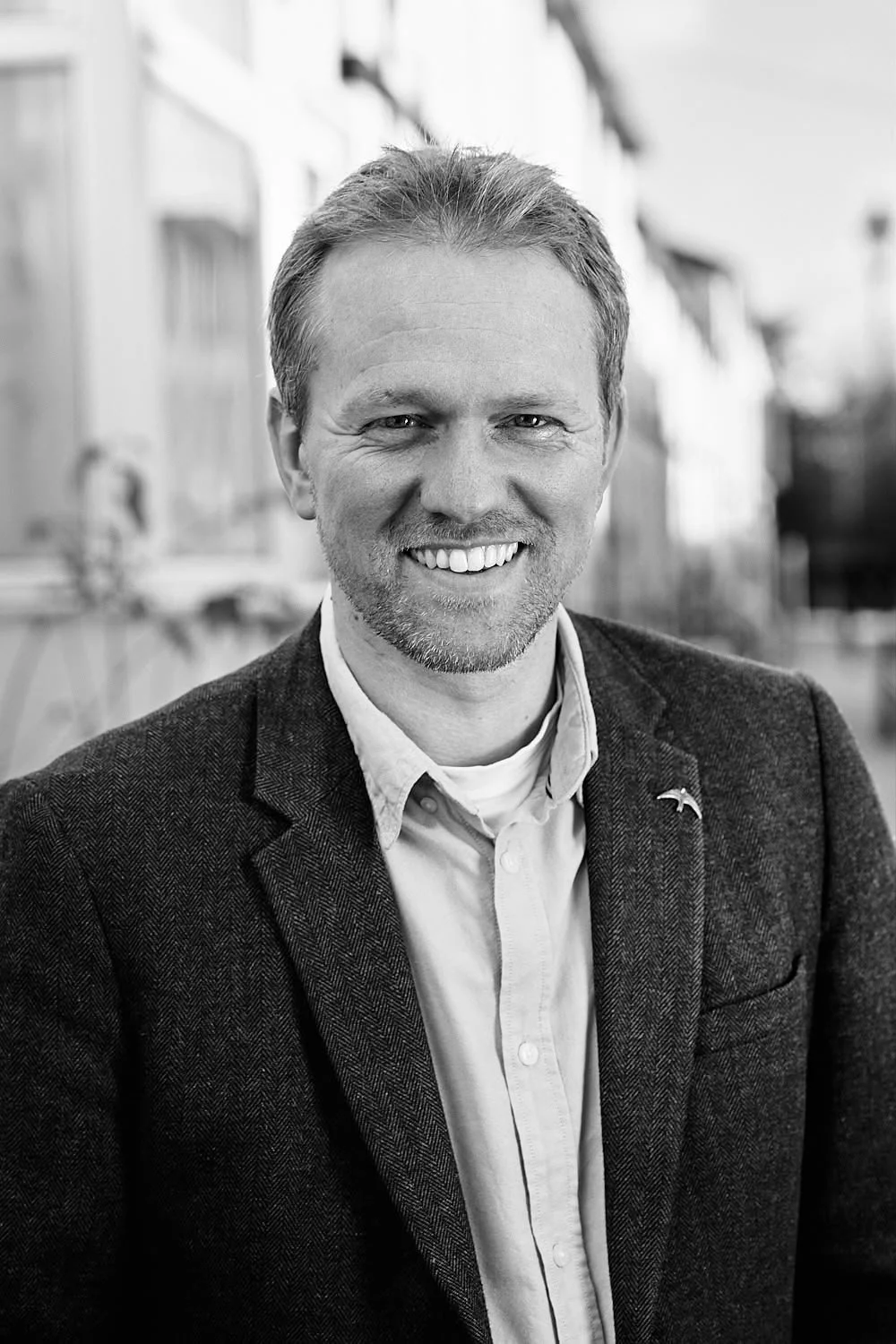
The reason they say that they do that is because the businesses in there can't afford to pay the costs it would take to renovate the place and keep it structurally sound. Do you not buy that?
Well, why did they buy it however many years ago, say that it was a success, and then not do it? That speaks to me that it shouldn't have been bought in the first place. How many years? Was it 10 years ago? Yeah, it's going to be trunked away. It's going to become a car park.
Parkmore hasn't worked. Elbert Place hasn't worked. The railway hasn't worked. And I'm sure there's another one. Brompton, that was it. And so they would probably say, oh, Brompton haven't come because there wasn't the infrastructure. But, yeah, what is here hasn't really been done well in the first place.
What I'm hearing from you is that you don't think that there's a cohesive, joined up plan about what Ashford is for. And then an attempt to cohesively plan the development of Ashford. Rather than a critique of Ashford in itself, I guess I'm interested in what's it like for you as an accountant to operate here? How do you find it?
I think generally at the minute in this situation, I don't think there's a lot of confidence that businesses have got at the minute. And that's kind of a wider thing of economic challenges, not a lot of confidence from government as to what's happening or where things are heading to. I think there are opportunities. We have got a good foothold to get into London and a lot of clients do kind of leverage that. Or are people kind of coming away from London to retreating out here? Yeah, I think there are opportunities.
What's that thing: ‘create the opportunities from calamity,’ or something like that? And business will find a way for certain people, but I don't think it's been the easiest for other smaller businesses to kind of establish themselves and get going, if that makes sense.
What about you?
It's not been straightforward, but the plan has kind of worked in terms of the way that I kind of saw things are going. I don't want to say, oh, it's been really, really easy. But it has been OK.
I guess all the challenges that I thought I was going to have, I've had them and I've managed to kind of combat them, I guess. I think the challenge of growing and scaling and when you take someone on, that's probably one of the hardest things because I've got two people who work for me. And there's a real thing of that you're then responsible for their mortgage. And that's a huge weight for the employer to have a responsibility for that. And as it turns out, it's maybe a bit of imposter syndrome, a bit of just a phase that you have to go through of getting used to being in that state. That's probably been the biggest challenge I've had this year, taking on employee number three and evolving into that. And as well, that then changes your role as well.
So when she came on, it then meant that my role changed significantly. So I had to kind of sidestep, or pivot, into a slightly different role. And that took a while in my head to adjust to.
So that's interesting: you talked a little bit about the challenges that the town faces, sort of the general overview of the challenges there. But actually, the main challenge that's outlined has nothing to do with the economic situation in town. It's had to do with a re-skilling that you've had to do in order to learn how to manage staff. Despite all of the challenges of the town, do you find that actually business is OK?
I would say so, yeah. There's always kind of new inquiries coming on board from the various groups that I'm in. So I do the Chamber of Commerce, I do B&I, I get along to a few other bits and pieces. I try to work or cultivate a culture of referrals from existing clients. And so that does mean that there is always stuff coming in, new clients coming on board from a range of different sources. I'm glad to hear it.
-
'It’s far more important to me/us to work on a more relational basis with clients.'
Adam Clegg
My suspicion is that it's difficult in Ashford for reasons that you talked about, there being reasons for people to not congregate within the centre. But it's difficult to build a sort of sense of community cohesively within Ashford. And I think whilst there are, now of course communities exist in plurals, there are different communities. And where we are at the moment, the Low Key Tap Room does a really good job of building a sort of music community, in conjunction with Coachworks as well. And Screen South do a very good job at the cinema and the large studios of doing film. But in terms of with business and entrepreneurs, I think it seems quite difficult to do that in Ashford. Whereas in places like Maidstone for example, the council has done a really good job of putting on training events and networking events themselves.
But if there was one sort of plausibly realistic thing that would you change in Ashford, what would it be?
Just thinking physically around the town, in terms of what you've got going on.
The town centre struggles because it's sort of on this downward trajectory in terms of the way things are going and general economic stuff. There are pockets of community, like you say, not just in business but in the wider context in terms of running clubs or creative stuff, all those things that you've given back.
The Nepalese community is thriving in Ashford for example, it's wonderfully vibrant, loads of events…
Yeah, loads of amazing Nepalese food as well. It's really hard to pin it down to one thing. Maybe not necessarily one thing that is going to revolutionise the whole town, but one concrete thing that you could envisage being done to help in some way. One of the problems we have is that it's very hard to get started or find somewhere for businesses to get going in terms of business space.
So you've got places like Evegate, which are really good. And that is good actually, Evegate is fine. There are loads of places here that are vacant sites. So is it grants that support people to run their own business?
So I think the person that introduced me to you on LinkedIn was Caroline Hallett from the Kent Foundation. They've got some really successful projects that are going at the minute in Gravesham where it's supporting young people, up to 40 year olds, to start their own business. Through mentoring, through funding and support, and again this community thing.
I'm a mentor for the Kent Foundation. So probably a project like that is probably the single biggest thing. Drop a load of money to someone that's tried and tested of doing that kind of a thing, that kind of kickstarts growth. And then liaising with them of, you're running this project for us, you're speaking directly to people through a different channel. In terms of, if a young person were to speak to a counsellor, then there probably wouldn't be that, they'd be on different wavelengths I guess. Whereas you go through someone who is kind of an advocate or on their side and can speak to the 50 or so young entrepreneurs that they've got kind of going through it. To then play that together into a more cohesive idea of what is needed.
I like that Julie Hall, who was previously here, said that we just need to bring people into the town centre to spend money. Because so much wealth gets extracted either by big business taking offshore in legitimate and less legitimate ways. But also HS1 taking money out of the city because whilst the idea originally was it would allow people from London to come and live out here. So maybe they'd spend money but, actually in practice they'd just go back to London to spend the money because it still works out cheaper to live here and commute.
Last question then. Give us one place in Ashford that you really like going to.
I would say the Everest Inn is really, really good. That is consistently really good food. I go there probably every couple of months for a networking thing on Thursdays. That's always good. And which networking thing is that? That is put on by Handelsbanken. They meet monthly of essentially professionals, so solicitors, accountants, bankers or Handelsbanken in particular. Or land agents, those sorts of things coming together and having good food as well. Matches is pretty good as well.
Having spoken to Adam, recognised the importance of understanding the relationship between structural socioeconomic issues and individual agency. Structural concerns – like the state of the economy, social pressures and attitudes – lay the groundwork for our agency, often defined in political science as ‘purposeful social action’. Adam’s concerns about the underdevelopment of Ashford were very real and, yet, the biggest practical concerns facing his business were his management skills and concerns around his new member of staff. It would, of course, be likely that Adam would feel concerned regardless of Ashford’s economic status, and the disjunction the structural issues we discussed at length (such as business confidence) and his actual practical success was striking.
The discussion also made me think about the strength of collective belief in our economy, and the relationship between belief and truth. In After Finitude, Quentin Meillassoux argued that, in our contemporary society, in which we’ve done away with concepts like Truth (remember the days of post-truth and fake news?), we have absolutised belief – and we have therefore no idea what might actually be the case, and what not. It’s commonplace to hear about the lack of business confidence in today’s economy, the corollary of which would likely be business stagnation and no growth. However, Adam has had remarkable business success – to the extent that he is now a Kent Foundation mentor.
Is this disjunction the result of the popular belief that the economy is challenging is actually incorrect at a structural level (i.e. the belief is untrue), or is it because Adam has particularly strong agential capability in the face of structural pressures. Certainly, Adam’s story is one of success, and his mentees would be strongly benefitted by listening to what he has to say about business success.