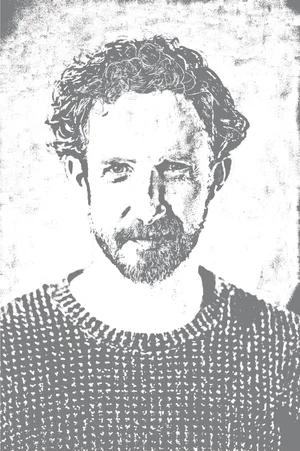
Good Photography Gets You Good Work
Why Photography?

Peter Barnett’s
Professional Headshot
Occasionally, when someone asks what I do for a living, there’s a little wry smile on their face when I tell them I’m a portrait and headshot photographer. ‘Why,’ someone asked once, ‘would someone pay money for a photographer when they can just take it with their camera? It doesn’t really matter what someone’s photo is on LinkedIn’. Cheeky, I thought, but it is an interesting provocation to think about.
On the one hand, it’s fair enough. For some people who are unlikely to have LinkedIn, or work in roles for which putting photos on CVs is considered discrimination, there’s likely no real reason to go to a headshot photographer – a phone will do, and cameras on phones are really good now. I’d never argue that everyone’s Facebook profile picture should be taken by a professional photographer, and that’s why I don’t bore my friends trying to get them all to have photos done!
On the other hand, however, I think the question belies really what a good photographer does, because a photographer is not just someone who has an expensive camera. It is a bit that however: at time of purchasing, my camera cost £2,600 including a kit lens, but I also use a portrait lens that cost £800. As I’m not a nature photographer I don’t use nearly all the features of the camera, but the focus speed, accuracy and focal depth of the lens/camera combination is a significant part of what makes my ‘look’ my look. And it should go without saying that, if you like the look of my work, it would both be impossible to have come up with it without the kit and difficult to fake it now. On top of this, there are lights, backdrops, stands, computers. software, and studio space to think about. So, hiring a good professional photographer ensures that you’re getting someone with the right kit to get the job done reliably.
It’s Not Just For The Kit
The thing that really makes a good portrait and headshot photographer stand out however, aside from their kit, is their knowledge of how to use it in the context of a photoshoot. Photoshoots, in some ways, are really quite strange: they are quite contrived – lights and cameras pointing at the client (and in my case the photos being displayed back to them as I shoot tethered to a laptop) – but, at the same time, the goal is often to get a natural, even sometimes casual look. In this way, a photoshoot can be compared to a car: we know that the end goal of car journey to get somewhere, but a car is much more than just an engine, frame and seats – and a car journey is better if we’ve enjoyed it so much we barely realised we made it (and it’s even better if we enjoyed it!). A good photographer realises then that what makes them stand out is not the equipment at all, but how they work with the client to make it as natural and enjoyable as possible – the equipment should fade into the background so that the client enjoys the shoot and is at ease with themselves despite it all.
So, given some basic necessities (like a camera, a light source, and an environment), a good photographer can work well regardless of what equipment they use. What’s more, they work around the equipment, interacting with the client to create excellent photos and removing any distractions from the relationship they are building between the two of them. But to what end?
What if Our Image Actually Stood for Something?
There are many reasons why someone might come to a photographer. Again, not everyone needs excellent photographer and it would be disingenuous of me to argue otherwise. However, aesthetics and presentation are important, and deserve some consideration for a broad number of people. A mentor of mine once put it like this: think about police commissioner elections and how much of a waste of time most people think they are (this is borne out in the data as no more than 20% of eligible voters tend to vote for commissioners). Now think of the image of the commissioners: they are almost always unbelievably bland-looking phone photos of (usually) men in cheap suits – so its no wonder people don’t bother voting for them! You wouldn’t want to be thought of in the same way, would you?
Instead, think of the great photos of our time: that photo of Lincoln before his Cooper Institute speech, that photo of Anne Frank, that picture of Churchill, that picture of Einstein with his tongue out, or that picture of Marilyn Monroe over the vent. These are iconic photos that will forever be associated with - and perhaps even define – the events of that particular era. It would be naïve to argue that amazing photography would bring 100% turnout to the ballot boxes, but what if we lived in a world where politicians looked like people we could look up to, and even aspire to be?
What I am arguing is that good photography will put you in a position in which people will take note. Good photography of you will provoke a visceral, emotional reaction in the viewer and it will come to define your image. It will create a visual story of who you are, what you stand for and where you are going – and people will take note of it. You will stand out as someone who has something to say, for how that is communicated without words, and it will stand as a legacy for who you are in the minds of those who have seen it.
There’s no reason why a photograph of you can’t be equally as iconic of you as it is is with any of the examples above (Churchill was no looker…!) – and a good photographer will capture just that kind of image.
Video of actor Peter Barnett explaining that he got hired as soon as he posted his new headshots from me.